The Harrowing History of Missouri State Penitentiary

On Saturday, my sister, her boyfriend and I made a trip to visit a 168-year-old penitentiary. I was surprised to find out what I learned! The lady that provided the tour was usually a night tour guide sharing ghastly and eerie spooks of the penitientary at night. She was called in to give us a history tour by day and boy, was I in for a treat! The information I found was harrowingly staggering!
Nestled in Jefferson City, Missouri, the Missouri State Penitentiary (MSP) stands as a grim testament to the evolution of the American penal system. Often referred to as “The Bloodiest 47 Acres in America,” MSP’s storied past offers a window into the harsh realities of prison life over its history.
 The MSP Inmate Ball Team, one of the many activities inmates did as an outlet.
Founding and Early Years
Opened in 1836, the Missouri State Penitentiary was among the earliest prisons west of the Mississippi River. Initially designed to house a modest number of inmates, it quickly grew in size and notoriety. The early years were characterized by severe overcrowding and rudimentary conditions, where survival was a daily battle. Inmates endured hard labor, constructing their own cells and the prison infrastructure, all while grappling with brutal treatment from guards.

A Reputation for Violence
By the early 1900s, MSP had earned its ominous nickname due to the extreme violence that plagued its confines. Riots and brutal confrontations were commonplace, leading to a high inmate mortality rate. The most infamous riot occurred in 1954, leaving multiple inmates dead and dozens injured. The guards, often outnumbered and underprepared, resorted to draconian measures to maintain control, further fueling the cycle of violence.

Notorious Inmates and Stories
The penitentiary’s roster of inmates reads like a who’s who of criminal infamy. Among them was Charles “Pretty Boy” Floyd, a notorious gangster of the 1930s, and James Earl Ray, the assassin of Martin Luther King Jr., who made a brief and daring escape in 1967. Their stories, along with countless others, add layers of intrigue and horror to MSP’s legacy.
 American Bank Robber, Charles Arthur Floyd, known as “Pretty Boy” Floyd.
One particularly chilling story is that of Bonnie Heady and Carl Hall, who, in 1953, kidnapped and murdered a six-year-old boy named Bobby Greenlease. Despite receiving a substantial ransom, they killed the boy, burying his body in Heady’s backyard. Their swift capture and execution in MSP’s gas chamber highlighted the severe and immediate consequences of their heinous crime.
 Bonnie Heady, an American kidnapper who murdered a 6-year old boy and was quickly executed with partner-in-crime, Carl Hall, less than three months later.
Daily Life in the Penitentiary

Life inside MSP was relentlessly harsh. Inmates faced grueling work schedules, unsanitary living conditions, and constant threats of violence. The infamous dungeon cells, used for solitary confinement, were tiny, dark, and damp, often housing inmates for weeks or even months as punishment. These conditions were designed to break the spirit, enforcing strict discipline through fear and suffering.

Modernization and Decline
By the 1970s and 1980s, efforts were made to modernize the facility and improve conditions. However, overcrowding and violence remained persistent issues. Despite these attempts, the penitentiary could not escape its grim legacy. In 2004, after 168 years of operation, MSP closed its doors, with inmates transferred to the newly built Jefferson City Correctional Center.

MSP Today
Today, the Missouri State Penitentiary stands as a historical site, offering tours that provide a sobering glimpse into its past. Visitors can explore the eerie cells, the gas chamber, and other remnants of its notorious history. These tours serve as a poignant reminder of the harsh realities of prison life and the evolution of the penal system in America.
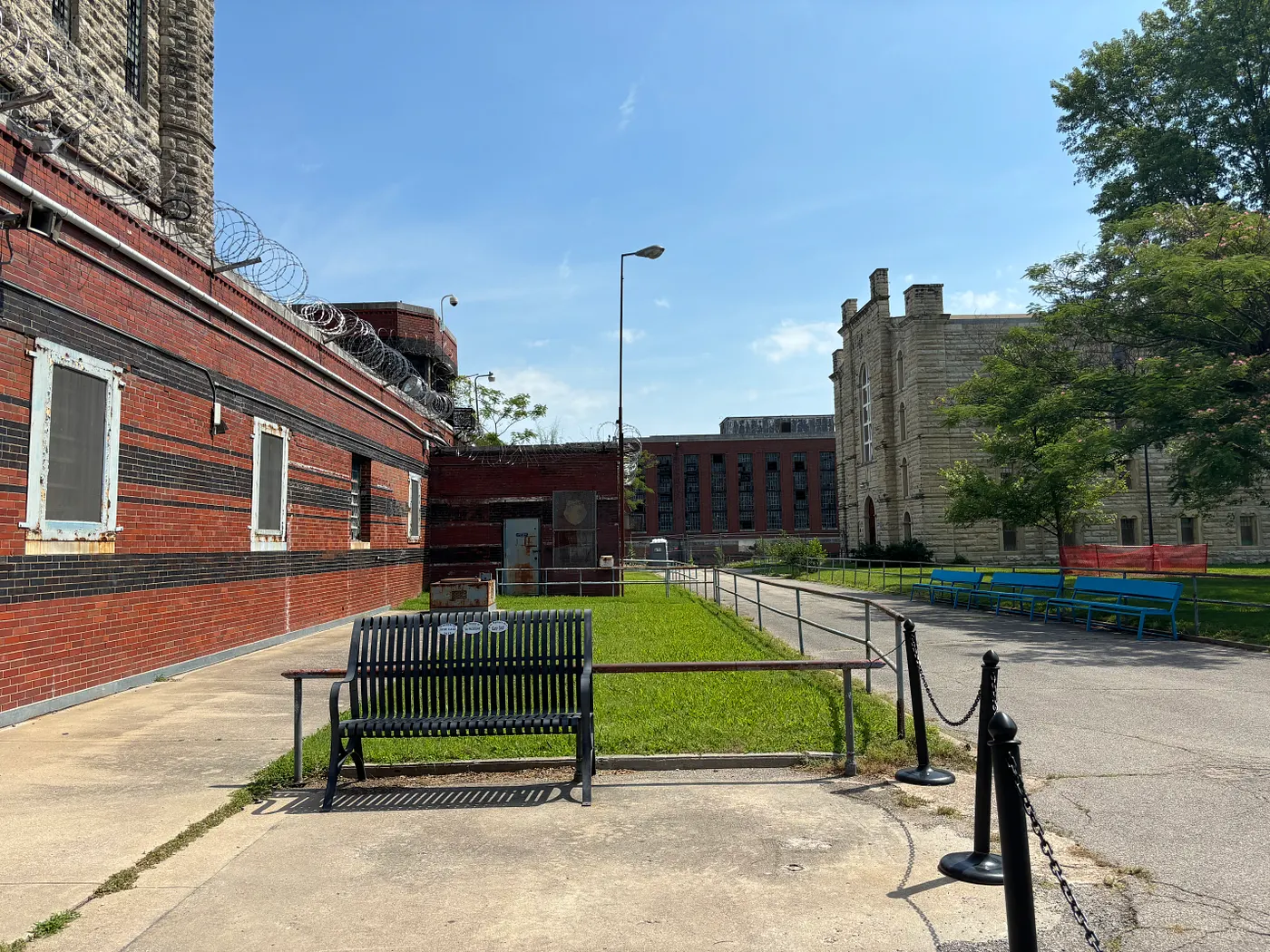
The Missouri State Penitentiary’s history is a compelling narrative of brutality, notorious criminals, and the unyielding human spirit. For history buffs, MSP offers a fascinating, albeit dark, exploration into the evolution of incarceration and the stories of those who lived and died behind its walls. Its legacy continues to captivate and educate, shedding light on the complexities of justice and punishment in America.

Eager to learn more about this historical and eerily fascinating place?
 J.B. Johnson, an inmate of the infamous MSP who wrote a book about his life in the dungeon cells when he was released.
Resources for further research

Check out the following resources for further research:
Books:
- Kantrowitz, R. Marc. The Bloodiest 47 Acres: Prison Life in Jefferson City.
- Rasmussen, Jamie Pamela. Missouri State Penitentiary (Images of America). Arcadia Publishing, 2010.
Websites:
- Missouri State Penitentiary Official Site: Offers detailed historical information and tour details. Missouri State Penitentiary
- Missouri State Archives: Provides access to a wealth of documents and photographs related to MSP’s history. Missouri State Archives
Articles and Online Resources:
- Brown, David J. “Missouri State Penitentiary.” Missouri Encyclopedia. Missouri Encyclopedia
- Crittenden, Danielle. “Inside the Walls of Missouri State Penitentiary.” Smithsonian Magazine. Smithsonian Magazine
Documentaries and Films:
- “Bloodiest 47 Acres in America” — A documentary that provides a deep dive into the notorious history of the Missouri State Penitentiary.
- “Missouri State Penitentiary: 168 Years of Infamy” — A film detailing the long and often violent history of MSP.
Historical Tours:
- Missouri State Penitentiary Tours: Offer a comprehensive look at the prison’s facilities and historical significance. Missouri State Penitentiary Tour

Thanks for reading along with me about this amazing piece of American history!
Stay tuned for another adventure — ghost hunting at MSP in the very near future!


Comments
Post a Comment