The Real Beast Isn’t the Lioness: Exposing the Hidden Cruelty Behind Canned Lion Hunting
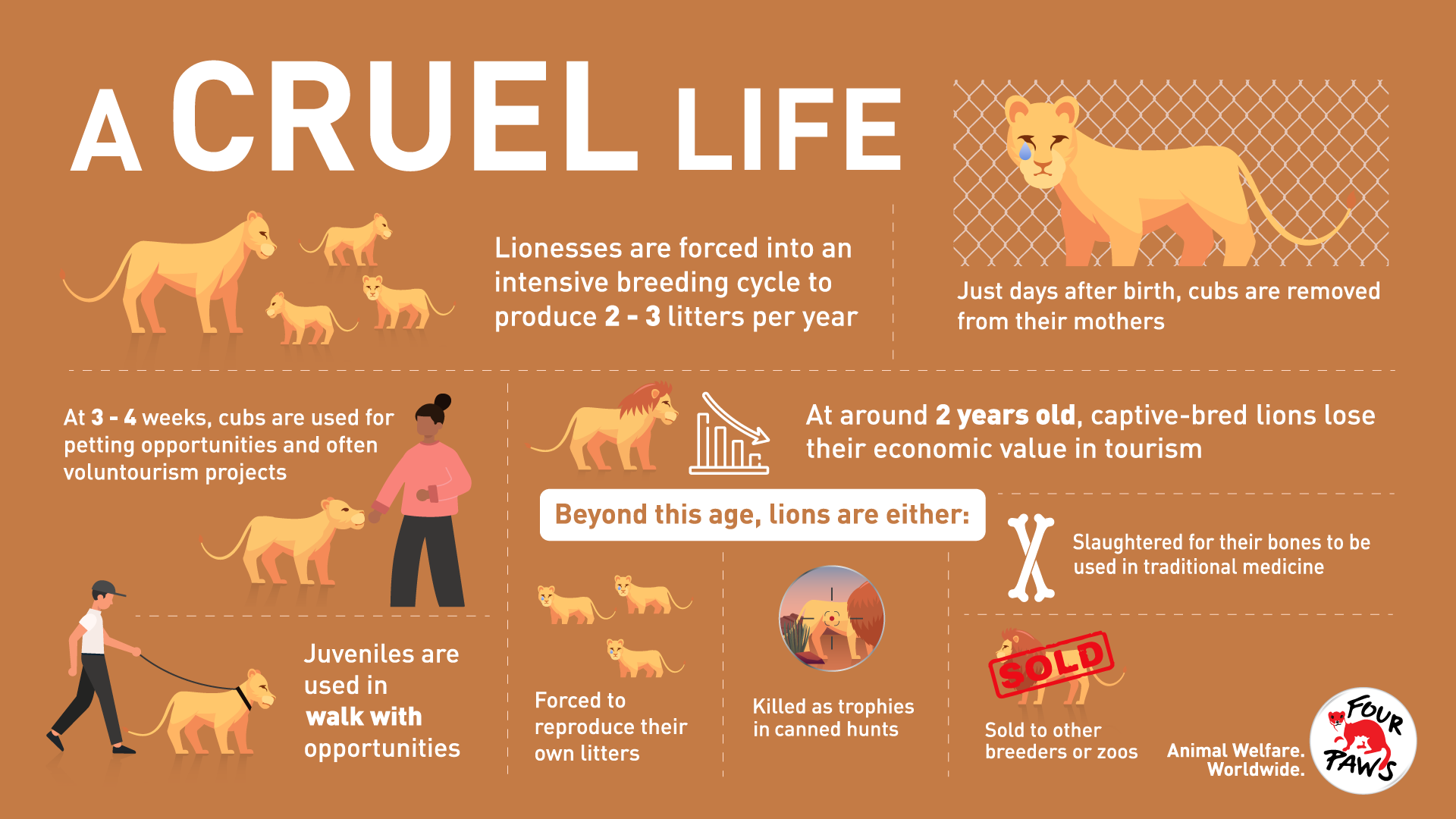 |
| Source: Four Paws, The Life Cycle of Exploitation - FOUR PAWS in US - Global Animal Protection Organization |
I sat down expecting a gritty action flick when I watched Rogue, starring Megan Fox. As a veteran, I was ready to roll my eyes at another Hollywood attempt to portray military tactics—and I did. The movie was chaotic, unrealistic, and filled with tactical blunders from start to finish. Honestly, the only thing it got right was the unpredictability of human behavior under stress.
But then, something unexpected happened.
Amid the cinematic mess of guerrilla fighters and a genetically modified lioness terrorizing a special ops team, a deeper story began to unfold. The lioness wasn’t a monster. She wasn’t hunting for sport. She was a mother, doing what mothers do—protecting her cubs.
And in the closing credits, director MJ Bassett dropped a truth that hit harder than any explosion in the film:
“There are over 12,000 lions held in captivity in South Africa. Many are kept in appalling conditions and later killed for their skins or used in canned hunts.”
That stopped me in my tracks.
As someone who served to protect life and freedom, this message struck a nerve. We talk about justice, ethics, and preserving what’s right—and yet, behind closed doors, these majestic animals are being bred in squalor, treated like disposable commodities, and ultimately slaughtered for profit, ego, and the exotic skin trade.
Let me be clear:
These lions are not wild.
They are not free.
They are farmed, sold, and killed in a practice known as canned hunting, where wealthy tourists or trophy hunters pay to shoot a lion in a confined space. It’s not sport. It’s cruelty. It’s exploitation disguised as conservation.
And the most heartbreaking part?
Most people don’t even know it’s happening.
So while Rogue may be forgettable as a film, its message deserves to be amplified. Because this is the real story. The real fight. And this time, the enemy isn’t a beast in the bush—it’s the systems that treat life as a product and profit as the only prize.
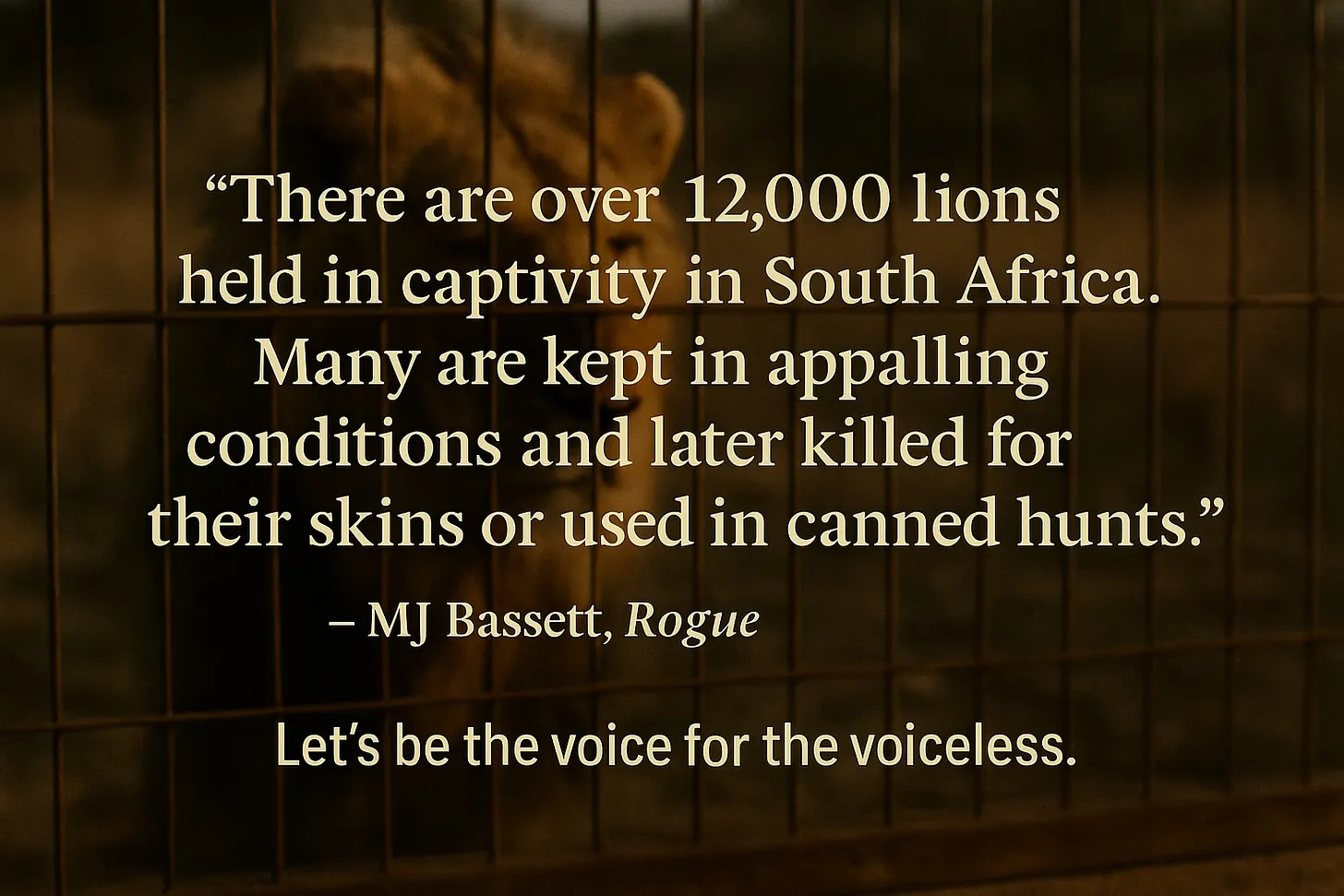
Let’s be the voice for the voiceless.
Share this. Talk about it. Learn more.
Because change starts with awareness—and awareness starts with someone speaking up.
Resources for Further Research & Action
1. Blood Lions Campaign
One of the most active organizations fighting against captive lion breeding and canned hunting in South Africa. Their documentary Blood Lions is a must-watch for understanding the industry.
📌 Take action: Sign their pledge, share the film, or support their youth ambassador program.
2. Born Free Foundation
An international wildlife charity that campaigns against wild animal captivity and trophy hunting.
📌 Explore: Their “Big Cat Public Safety Act” advocacy and reports on lion exploitation.
3. Four Paws International
A global animal welfare organization that rescues big cats and works to ban commercial wildlife trade.
📌 Support: Learn how they rehabilitate lions rescued from circuses, zoos, and breeding farms.
4. Panthera
Focused on wild cat conservation, Panthera supports research and protection of lions in their natural habitats.
📌 Act: Donate to support lion population preservation in the wild—not in cages.
5. The Humane Society International
HSI is actively campaigning for a global ban on trophy hunting and importation of lion trophies into the U.S. and Europe.
📌 Petition: Sign ongoing campaigns to influence policymakers.
What You Can Do
📌 Educate Yourself – Watch documentaries like Blood Lions or The Conservation Game.
📌 Speak Up – Share this blog or the awareness quote image. Use your platform, big or small.
📌 Support Ethical Tourism – Never participate in cub petting, lion walks, or pay-to-shoot “safari” experiences.
📌 Donate or Volunteer – Even small donations help rescues and campaigns.
📌 Contact Lawmakers – Ask your representatives to support bans on trophy imports or to investigate unethical breeding practices.


Comments
Post a Comment